

10 Best Fountain Construction Companies Worldwide?
A great fountain begins long before water reaches the nozzles. It begins with soil testing, hydraulic calculations, thoughtful design, and realistic maintenance planning. This guide examines 10 Best Fountain Construction Companies Worldwide, focusing on proven craftsmanship, engineering depth, material quality, and completed public projects.
Mark Fuller, founder of WET Design, once said, “Water is the most powerful and beautiful element on Earth.” His observation captures the challenge behind Fountain Construction. Water can appear effortless, yet every movement depends on pumps, filtration systems, pipe pressure, lighting controls, and precise nozzle calibration. A small error may create uneven arcs, excessive spray, or costly water loss.
Details matter.
The selected companies are considered through practical evidence, including project scale, technical innovation, safety awareness, and long-term service capability. Their work may include hotel courtyards, civic plazas, resort entrances, cultural landmarks, and interactive urban installations. Stone edges must remain stable. Electrical systems must resist moisture. Operators need clear access for cleaning and repairs.
No global ranking is flawless. Local climate, budgets, water regulations, and architectural goals can change the best choice. A company admired for monumental fountains may not suit a compact private courtyard. That limitation deserves attention. Readers should compare portfolios, request references, inspect maintenance plans, and confirm engineering responsibilities before signing contracts.
The following overview offers a practical starting point. It celebrates visual impact, but it also examines what visitors rarely see: dependable machinery beneath the surface.
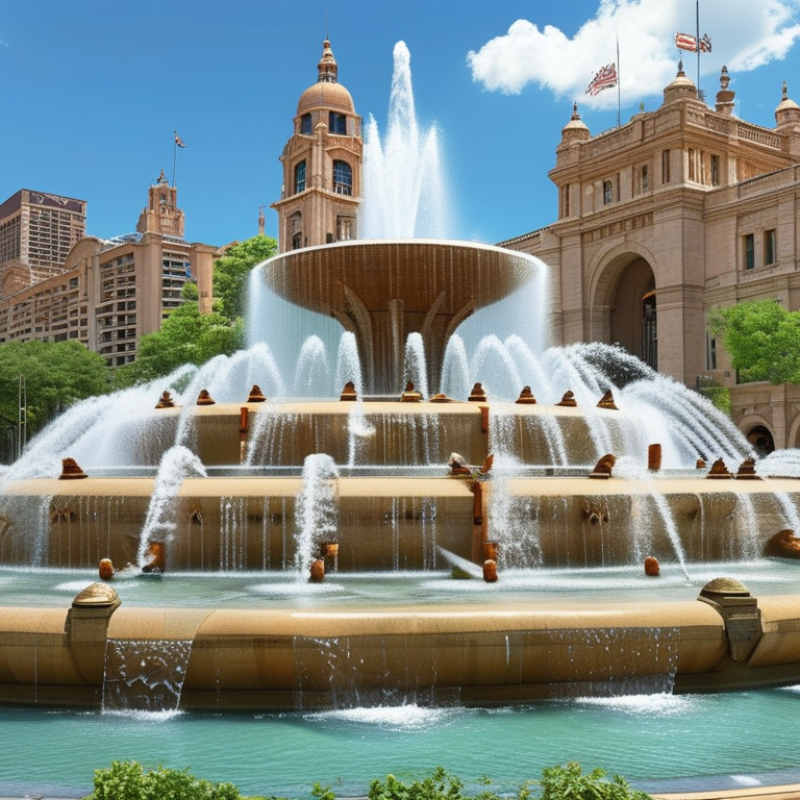
Defining the Global Fountain Construction Industry
10 Best Fountain Construction Companies Worldwide?
Defining the Global Fountain Construction Industry
The global fountain construction industry is becoming more technical, not merely decorative. According to Grand View Research, the water fountains market is expected to expand steadily through the decade, supported by urban development, hospitality projects, and public landscape investment. Demand now includes interactive lighting, automated water control, efficient pumps, and weather-resistant materials. A successful fountain must perform safely at night, during heat, and under heavy visitor use. It must also fit local water conditions. Small details matter.
Sustainability is reshaping professional standards. The United Nations World Water Development Report 2024 identifies agriculture as the largest user of freshwater worldwide, increasing pressure on decorative water systems. Leading contractors therefore design closed-loop circulation, filtration, leak detection, and low-loss spray patterns. The International Energy Agency reports that efficient motors can reduce electricity consumption across many applications. These findings support better Fountain Engineering, although energy savings vary by pump size and operating hours. A beautiful fountain can still waste resources. That weakness deserves honest review.
Global quality depends on more than visual impact. Experience includes surveying the site, testing water chemistry, coordinating structural work, and training maintenance teams. Expertise appears in hydraulic calculations and control systems. Authority comes from documented projects and qualified engineers. Reliability requires transparent warranties, measured performance, and realistic maintenance budgets. No ranking captures every regional challenge. A technically impressive design may fail when spare parts, skilled technicians, or climate data are overlooked.

Criteria for Evaluating Leading Fountain Construction Companies
Evaluating the world’s best fountain construction companies requires more than studying photographs. Proven hydraulic experience matters. Review completed projects with similar scale, climate, water quality, and visitor volume. Ask for commissioning records, maintenance logs, and measurable operating results. A beautiful basin can hide poor filtration.
Water efficiency should be tested, not promised. The United Nations World Water Development Report 2024 states that agriculture uses about 70% of global freshwater withdrawals. This context makes responsible recirculation essential, even for decorative water systems. The U.S. Environmental Protection Agency reports that household leaks can waste nearly one trillion gallons annually in the United States. A strong contractor should therefore specify leak detection, automatic makeup-water controls, efficient pumps, and accessible filtration. Small details matter.
Safety and lifecycle cost deserve equal attention. Evaluate anti-slip surfaces, electrical protection, chemical handling, emergency shutoffs, and public-access barriers. Request a five-year maintenance forecast, not only an installation price. Digital modeling can reveal pipe conflicts before excavation, although it cannot replace skilled site supervision. References should include difficult projects, not only successful showcase installations. Independent testing of flow rates, spray heights, noise, and water quality adds credibility. I would be cautious with impressive claims lacking test data. A low bid may still become an expensive fountain. Even experienced evaluators can underestimate cleaning labor, seasonal shutdowns, or local permitting delays. That weakness should remain visible during selection.
10 Best Fountain Construction Companies Worldwide? - Criteria for Evaluating Leading Fountain Construction Companies
A neutral evaluation matrix for comparing fountain construction providers without displaying company names or brand-specific data. The weighting totals 100% and is designed for technically informed project selection.
| No. | Evaluation Criterion | Objective Benchmark | Recommended Evidence to Check | Weight |
|---|---|---|---|---|
| 1 | Hydraulic and Fountain Design Capability | The proposal should include water-flow calculations, nozzle selection, pump sizing, basin capacity, splash control, and wind-related performance considerations. | Concept drawings, hydraulic calculations, equipment schedules, three-dimensional views, and completed-project case studies with measurable specifications. | 15% |
| 2 | Engineering and Technical Integration | Mechanical, electrical, structural, civil, lighting, controls, and drainage systems should be coordinated before construction begins. | Coordinated construction drawings, design-responsibility matrix, load calculations, interface drawings, and technical submittal procedures. | 15% |
| 3 | Water Treatment and Hygiene Management | The system should address filtration, disinfection, water-quality monitoring, chemical handling, water replacement, and safe access for maintenance. | Water-treatment schematic, operating procedures, maintenance schedules, chemical-safety documentation, and laboratory or commissioning records where applicable. | 10% |
| 4 | Safety and Regulatory Compliance | The design should control electrical, slip, drowning, chemical, pressure, access, and moving-equipment risks in accordance with the applicable local codes. | Risk assessments, electrical protection details, anti-slip specifications, safety signage plans, method statements, permits, and inspection certificates. | 12% |
| 5 | Durability and Material Selection | Materials should be suitable for continuous water exposure, outdoor conditions, ultraviolet radiation, temperature variation, corrosion, and public use. | Material data sheets, corrosion-resistance information, waterproofing details, finish samples, warranty terms, and replacement-part availability. | 10% |
| 6 | Energy and Water Efficiency | The proposal should quantify pump power, lighting demand, operating hours, make-up water, evaporation allowance, overflow losses, and water-recovery measures. | Annual energy estimate, pump-efficiency data, LED power schedule, control-sequence description, water-balance calculation, and operating-cost assumptions. | 10% |
| 7 | Construction Quality and Project Delivery | The contractor should demonstrate controlled procurement, qualified installation, inspection points, testing procedures, and a realistic programme for design and construction. | Detailed programme, quality plan, inspection-and-test plan, procurement schedule, site organization chart, and documented change-control process. | 8% |
| 8 | Control, Automation, and User Experience | Controls should support reliable sequencing, adjustable water patterns, lighting coordination, fault alarms, remote monitoring where required, and safe shutdown. | Control philosophy, wiring diagrams, interface descriptions, sample operator screens, emergency-stop arrangements, and factory or site acceptance-test plans. | 8% |
| 9 | Maintenance and Lifecycle Support | Routine cleaning, inspection, filter servicing, pump maintenance, winterization where relevant, spare-parts planning, and technical support should be clearly defined. | Operation and maintenance manuals, preventive-maintenance calendar, training plan, spare-parts list, response commitments, and post-handover support scope. | 7% |
| 10 | Commercial Transparency and Value | The tender should clearly separate design, equipment, installation, testing, commissioning, taxes, exclusions, provisional sums, and long-term operating costs. | Itemized quotation, payment schedule, assumptions register, lifecycle-cost estimate, warranty conditions, insurance details, and clearly stated exclusions. | 5% |
Profiles of Ten Notable Fountain Construction Companies Worldwide
10 Best Fountain Construction Companies Worldwide?
Profiles of Ten Notable Fountain Construction Companies Worldwide
A European water-engineering company designs civic fountains with stone basins, stainless-steel nozzles, and low-energy circulation systems. Its engineers usually test water pressure before final installation. A North American contractor specializes in interactive plazas, using pressure-sensitive controls and slip-resistant paving. Field experience matters when children and heavy foot traffic share one space. A Middle Eastern firm builds large choreographed fountains for hotels and public districts. Its work requires careful coordination between pumps, lighting, music, and wind conditions.
An East Asian manufacturer focuses on compact indoor fountains for museums, shopping centers, and transport halls. Quiet pumps and sealed filtration systems are central to its designs. A Southern European studio combines sculptural stonework with traditional hydraulic techniques. Its craftsmen often adjust nozzle angles by hand. A South American company develops durable outdoor systems for warm climates, where algae growth can become difficult. Regular maintenance remains essential. An Australian contractor emphasizes rainwater reuse and corrosion-resistant components for coastal sites.
An African engineering group provides practical fountain systems for municipal parks and cultural venues. It often prioritizes accessible maintenance over dramatic effects. A Nordic company is known for restrained designs, automated water monitoring, and winter protection strategies. Freeze damage is still a concern. A multinational project integrator manages complex installations across airports, resorts, and urban developments. Its strength lies in coordination, yet large teams can slow decisions. These profiles show useful expertise, but project quality still depends on local soil, climate, budgets, and long-term servicing.
Comparing Design, Engineering, Technology, and Project Capabilities
Choosing among the 10 best fountain construction companies worldwide requires more than attractive renderings. The strongest teams combine artistic design with hydraulic engineering, structural planning, and disciplined site execution. Their portfolios should show fountains that remain balanced under changing wind, water pressure, and visitor loads. Look for measurable experience, not polished images. Evidence matters. A reliable contractor explains maintenance access, pump redundancy, filtration, drainage, and energy use before construction begins.
Design capability appears in proportion, lighting, sound, and movement. Engineering capability appears in calculations, material specifications, and tested water treatment systems. Advanced teams use digital models to coordinate nozzles, pipes, electrical routes, and control cabinets. Sensors can adjust flow during heavy rain or unusual water loss. Yet technology alone proves little. Ask whether technicians can calibrate equipment, diagnose faults, and train local operators after handover. On a real project, clear drawings often matter more than impressive software.
Project capability separates dependable specialists from creative suppliers. Compare scheduling methods, procurement control, safety procedures, subcontractor management, and documented quality inspections. A credible team reports delays honestly and records design changes with cost and approval trails. References should include similar scale, climate, budget, and public access conditions. Some evaluations remain imperfect because published performance data is limited. That limitation deserves attention. Independent testing, phased commissioning, and realistic maintenance budgets can reduce costly surprises.
Selecting the Right Fountain Construction Company for a Project
A globally recognized fountain contractor may still be unsuitable for your project. The right choice depends on site conditions, technical capability, and communication. Ask for completed projects with similar scale, water depth, lighting, and climate. Request drawings, maintenance records, and client references. A polished portfolio is not enough.
During site visits, experienced teams check soil stability, drainage routes, electrical access, wind exposure, and visitor safety. They should explain pump capacity, filtration, waterproofing, and water treatment in clear language. Look for licensed engineers and documented quality procedures. Confirm who handles permits, inspections, installation, and future repairs. One missing responsibility can create expensive delays.
I once reviewed a fountain concept that looked impressive on paper. The design ignored nearby tree roots and seasonal runoff. That oversight changed the budget. It was a useful mistake. Ask for a realistic schedule with testing time included. Check whether replacement parts are available locally. Contracts should define performance standards, warranty limits, cleaning intervals, and response times. Also discuss noise levels and nighttime lighting before construction begins. A company willing to challenge your assumptions may protect the project better than one that simply accepts every request. Still, expert advice can be wrong, so verify key claims with independent engineers and local authorities.
10 Best Fountain Construction Companies Worldwide? – Selecting the Right Fountain Construction Company for a Project
This 100-point evaluation framework helps project owners compare fountain construction companies without relying only on reputation. The suggested weighting gives the greatest importance to engineering quality, waterproofing, hydraulic performance, safety compliance, and long-term maintenance capability.

Catalog
Replacement Cushions
New Jersey Catalog