What Type of Trampoline Mat Is Best?
Choosing a Trampoline Mat is not just a question of color or price. The fabric, stitching, spring attachments, and fit all affect how the jumping surface performs. Woven polypropylene is common because it is strong and flexible, but material names alone cannot prove quality. Sun exposure, moisture, and repeated bouncing can gradually weaken a mat. Small details matter.
Safety guidance offers useful context. ASTM International’s F381 standard sets safety requirements for consumer trampoline components, assembly, use, and labeling. The U.S. Consumer Product Safety Commission’s National Electronic Injury Surveillance System tracks emergency-department-treated trampoline injuries. These sources do not rank mat materials, but they underline why construction and proper installation deserve attention. A standards reference is not a guarantee that every product is equally durable.
Pediatrician Dr. Susannah Briskin, coauthor of an American Academy of Pediatrics policy statement, said: “Trampolines are not safe for children to use at home, and the AAP recommends that they never be used at home, in routine physical education classes, or on playgrounds.” That guidance is a sobering reminder: a mat cannot remove every risk. For shoppers comparing options, examine UV-resistant fabric, reinforced stitching, secure spring connections, and exact frame compatibility. Check the product manual, too. A glossy surface can still hide weak seams, and replacing a worn mat with the wrong size may create new problems. This guide compares common mat types and explains what to inspect before buying.
What a Trampoline Mat Does and How It Affects Performance
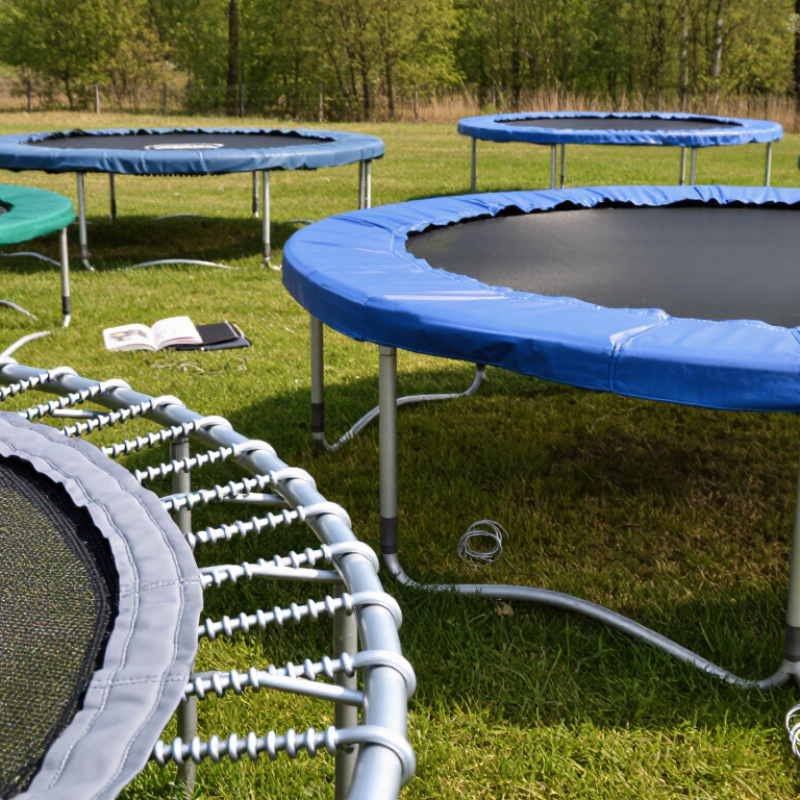
A trampoline mat is the surface that supports the jumper and transfers force to the springs and frame. Its weave, size, and tension all influence how a bounce feels. When you press down near the center, the fabric should flex smoothly rather than sag sharply or feel rigid. That small difference matters.
A tightly woven mat may feel more controlled, while a looser or more flexible one can allow deeper movement. Neither feel is automatically better; the result depends on the jumper, spring setup, and trampoline design. Mat size and attachment-point spacing must match the frame. Even a well-made mat can perform poorly if it is fitted incorrectly. The mat is only one part of the system.
Material quality affects how well a mat handles repeated stretching and outdoor exposure. Sunlight and moisture can gradually weaken some fabrics and stitching, though wear is not always obvious at first. Inspect the surface, seams, and attachment points for fraying or tears. Replace a damaged mat with one specified for the trampoline’s frame and spring configuration. It is tempting to blame a weak bounce on the mat alone, but springs, frame condition, and setup matter too. A useful reminder.
Common Trampoline Mat Materials and Weave Types
Common Trampoline Mat Materials and Weave Types
Most trampoline mats use woven polypropylene because it is light and handles repeated flexing. MatWeb’s polypropylene property data lists unfilled PP at roughly 0.90–0.91 g/cm³. That figure describes the resin, not a finished mat’s strength or service life. Look for UV-stabilized fibers and reinforced stitching, especially around the springs. A sunlit backyard is demanding. Color and thickness alone cannot confirm durability.
Weave affects how the mat moves and wears. A tighter weave can limit snagging, while a more open structure may feel more flexible; actual performance depends on yarn, coating, and construction. ASTM D5034 measures fabric tensile strength, and ASTM D3884 evaluates abrasion resistance. These tests offer useful comparisons, but neither gives a universal trampoline-mat lifespan. ASTM F381 addresses trampoline safety at the component and system level, rather than prescribing one ideal weave. A useful question. Ask whether testing reflects outdoor UV exposure and repeated loading, not just a new sample pulled once in a laboratory. Even then, test results cannot perfectly predict a specific backyard’s weather or use.
What Type of Trampoline Mat Is Best?
Typical characteristics of common trampoline mat materials
UV-stabilized woven polypropylene is commonly used for outdoor trampoline jumping mats because it balances UV and moisture tolerance. Weave openness affects airflow and how easily water and debris pass through; reinforced stitching can strengthen the mat’s edges. Ratings are qualitative, not standardized test results—actual performance depends on construction, exposure, and care.
How Mat Design Influences Bounce, Durability, and Safety
The best trampoline mat balances controlled rebound with dependable construction. A tightly woven polypropylene surface can resist stretching, while reinforced stitching helps distribute load around the perimeter. Still, the mat does not create bounce alone. Spring length, spring tension, frame geometry, and user weight all affect how the surface responds. A lively bounce can feel appealing, but it is not automatically safer. That distinction is easy to overlook.
Inspect the stitching and attachment loops for fraying, loose seams, or uneven wear; small defects can grow under repeated loading. UV-resistant material may slow sun damage, but it does not make a mat weatherproof.
The U.S. Consumer Product Safety Commission’s 2014 injury data recorded roughly 100,000 trampoline-related emergency-department visits. Those figures do not show that mat design caused the injuries, but they underline why condition and safe setup matter.
ASTM F381, the consumer trampoline safety specification, addresses equipment design, performance, and labeling. Use it as a reference, not a guarantee of safety. A firm, evenly tensioned mat is a sensible choice; the ideal feel still depends on the complete trampoline and regular inspection.
Fit, Maintenance, and Replacement Considerations
Choosing a trampoline mat starts with an exact fit, not a guess based on frame diameter alone. Measure the frame across its outer edge, then check the replacement mat’s listed diameter and how that measurement is defined. Count the springs and compare their length and attachment style with the mat’s hook layout. Small details matter. A mat that seems close may pull unevenly or leave gaps. Confirm dimensions against the equipment manual when possible.
During routine checks, brush off leaves and grit, and let the mat dry before covering it. Look closely at seams, stitching, and each attachment point, especially after heavy use or strong sun. Fading alone may not prove failure, but brittle fabric, widening tears, or loose stitching deserve attention. Do not stretch a damaged mat back into place. That can hide the problem, briefly.
Replace the mat when a tear reaches a seam, several hooks are damaged, or the fabric no longer holds tension evenly. Choose one designed for the frame’s size, spring count, and attachment system; universal-fit claims still need checking. If measurements conflict, pause and ask the equipment maker or a qualified trampoline technician. It is tempting to reuse old springs, but inspect them for rust, deformation, or uneven length too. Small oversights are easy.

 Catalog
 Replacement Cushions
 New Jersey Catalog