How to Choose Unique Candle Jars for Your Brand?
A candle jar does more than hold wax. It shapes how customers see your brand, handle the product, and remember the scent. Unique Candle Jars can help a collection stand apart, but an unusual shape is not automatically the right choice. The jar still needs to suit the candle’s size, fit the intended price point, and feel comfortable in a customer’s hands. Small details matter. A heavy glass base can suggest quality, while a narrow opening may affect how the candle burns and how easily it can be used.
Choosing well means balancing appearance with practical performance. Consider material, capacity, color, closure, labeling space, and compatibility with your planned wax and wick. Request samples before placing a large order. Check dimensions, inspect the finish in natural light, and test a filled jar under appropriate product-testing procedures. Ask suppliers for clear specifications and quality-control information; do not rely on product photos alone. A pale amber jar, for example, may look warm online but appear much darker on a retail shelf.
There are trade-offs. Decorative lids can add polish, yet they may increase cost or complicate storage. A bold shape can attract attention, though it might not stack neatly. That is worth admitting. No single jar works for every brand, and even careful selection involves judgment. The goal is not novelty for its own sake. It is a distinctive, dependable container that supports the candle, communicates your brand clearly, and makes sense for the people who will buy it.
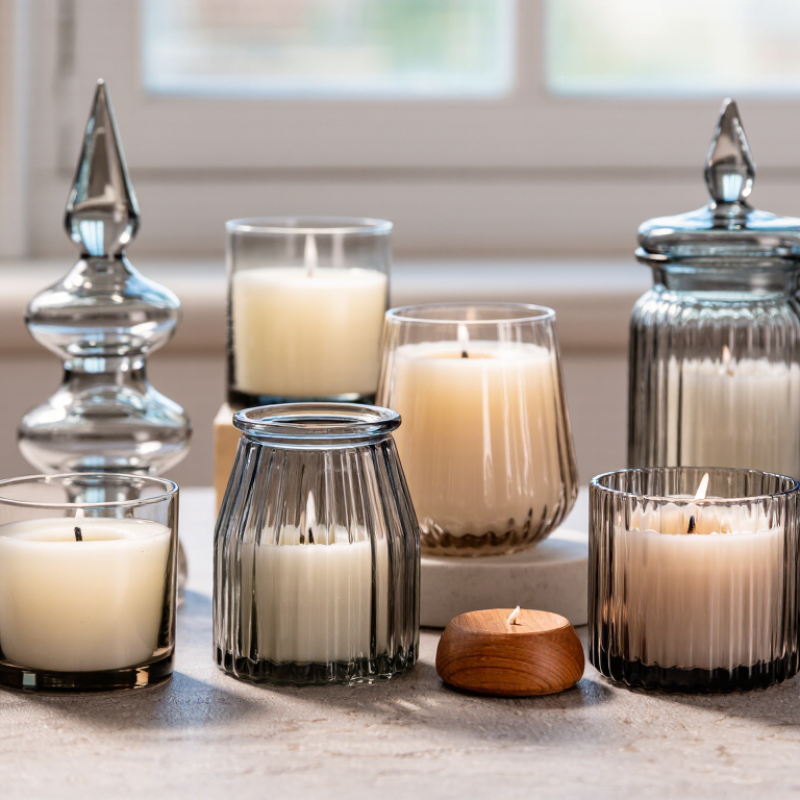
Define Your Brand Identity and Candle Jar Requirements
Before choosing a candle jar, write down what your brand should feel like in someone’s home. Calm and understated? Warm, rustic, or sharply modern? Turn those ideas into visible choices: clear or colored glass, smooth or textured surfaces, and a shape that fits your label. A pale amber jar can make a room feel softer, while straight-sided glass gives a cleaner, more contemporary look. These details should support the candle’s scent and story, not compete with them.
Then define practical requirements. Measure the planned wax fill, check the jar’s opening against your wick placement, and consider how customers will hold and store it. Request samples and inspect them under both daylight and warm indoor lighting. Look for uneven rims, bubbles, color variation, and lids that fit securely. Ask suppliers for material and heat-use specifications, and test the finished candle in the exact container before production. Appearance alone is not enough.
Set a realistic budget, minimum order quantity, and shipping plan before falling in love with a design. A beautiful custom shape may require more storage space or lead time than expected. I have seen small details, like a lid that rattles, change the whole impression. That matters. Still, early samples can mislead; one test burn cannot represent every batch. Record what works, revise what does not, and keep the requirements clear.
Compare Jar Materials, Shapes, Sizes, and Finishes
Choosing a candle jar starts with material, not color. Clear glass displays the wax, while ceramic creates an opaque, tactile look. Metal is lightweight but hides the candle inside. Grand View Research estimated the global candle market at USD 7.15 billion in 2022, with projected annual growth of 6.4% through 2030 (Candle Market Size, Share & Trends Analysis Report, 2023). A distinct shelf presence can help, but performance matters more. Check supplier specifications and test the exact wax, wick, and jar combination. A sample that looks right may not perform right.
Shape affects both appearance and everyday use. Straight-sided tumblers stack and label easily; rounded jars soften a display but may waste shelf space. Narrow openings can make cleaning awkward, while wide openings may expose the flame to drafts. Choose sizes for the intended burn time and comfortable handling, not just a product photo. This choice is not perfectly tidy. Confirm dimensions, fill limits, and performance through testing.
Finishes bring trade-offs, too. Clear glass shows wax color; amber or frosted surfaces mute it and conceal minor flaws. Gloss reflects light, while matte coatings can show transit scuffs. Request samples and inspect them in warm retail lighting and daylight. Small details matter. Check label adhesion, lid fit, rim smoothness, and carton protection before ordering. A beautiful jar can still feel too heavy or awkward to hold.
How to Choose Unique Candle Jars for Your Brand
Compare jar materials, shapes, sizes, and finishes. This chart shows typical thermal conductivity for common vessel materials; values are approximate bulk-material figures, not measurements of finished jars.
Glass and ceramic offer lower thermal conductivity than metal options, while tinplate steel and aluminum conduct heat more readily. For a distinctive look, consider how each material pairs with your preferred shape, capacity, and finish. Always test the complete vessel with your candle wax and wick before use.
Explore Customization Options for Distinctive Brand Packaging
Distinctive candle packaging begins with choices customers can see and feel. Select a jar silhouette that suits the fragrance: a low, wide vessel feels grounded, while a tall, clear jar highlights layered wax. Then customize the finish, label shape, lid, and color palette. Frosted glass softens bright hues; a matte lid adds contrast. Small details matter.
Deloitte’s 2015 consumer study on mass personalization reported that one in five surveyed consumers were willing to pay 20% more for personalized products. The study is dated and not candle-specific, so treat it as directional, not a sales forecast. Still, it supports testing small, meaningful options, such as a choice of label color or a short gift message. Keep type readable and test labels on curved glass; a beautiful design can become hard to read under warm shelf lighting.
Tips: Order physical samples before committing. Check jar dimensions, label adhesion, lid fit, and how the glass looks beside the finished candle. Ask a packaging supplier about minimum order quantities and decoration methods, then compare costs. Too many options can confuse buyers. Start with two or three variations, and learn from actual customer feedback.
How to Choose Unique Candle Jars for Your Brand? - Explore Customization Options for Distinctive Brand Packaging
| Customization Area | Common Options | What It Changes | Practical Selection Notes |
| Jar Material | Clear glass, colored glass, ceramic, or metal | Affects appearance, weight, opacity, and the way the candle is presented. | Check that the vessel is suitable for candle use and test it with the intended wax, wick, and burn conditions. |
| Shape and Profile | Straight-sided, rounded, square, tapered, or sculptural | Creates a distinctive silhouette and influences how jars pack and display together. | Consider shelf space, shipping cartons, label placement, and whether the opening suits the candle design. |
| Color and Transparency | Clear, tinted, opaque, or frosted finishes | Changes how the wax color and candlelight appear through or around the vessel. | Use physical samples to check color under different lighting; opaque finishes conceal the wax, while clear finishes show it. |
| Surface Decoration | Printed graphics, decals, engraving, or a separate label | Adds visual detail and provides space for product information or decorative artwork. | Confirm the decoration method works with the jar material and surface; test label adhesion on curved or textured areas. |
| Surface Finish | Glossy, matte, frosted, or textured | Alters reflectivity and the tactile impression of the packaging. | Review samples for fingerprints, scuff visibility, and how the finish looks alongside the label and lid. |
| Lid and Closure | Glass, metal, wood, or fitted reusable lids | Completes the jar’s appearance and can help keep dust and debris away from the candle when it is not in use. | Match the lid to the jar’s opening and test fit, finish, and ease of removal with production samples. |
| Capacity and Dimensions | Different fill volumes, heights, and diameters | Determines the package footprint and the amount of candle the vessel can hold. | Confirm usable fill volume, vessel dimensions, and packaging fit; validate the finished candle through burn testing. |
Evaluate Safety, Functionality, and Customer Experience
A distinctive candle jar should earn attention without compromising safe use. Start with glass or another material specifically designed for candle-making, and check the supplier’s heat-use guidance. Thin decorative vessels may look elegant but can crack under repeated heating. Check for a flat, stable base, smooth edges, and enough space around the wick. Small details matter. Test a sample through complete burn cycles before choosing a production size. Note any unusual heating, surface damage, or instability, and follow the wax and wick suppliers’ recommendations.
Functionality shapes the daily experience. A wide opening makes lighting and cleaning easier, while a well-fitted lid can help keep dust away between uses. Consider jar weight, grip, and dimensions, too. A heavy vessel may feel substantial on a shelf but cost more to ship and be awkward to handle. Labels should sit smoothly without covering useful details or peeling from warmth. Test the filled jar, not just the empty one.
Customer experience begins before the first burn. A clear or softly tinted jar can show the wax, while a textured finish adds a tactile detail. Still, appearance can sway a choice too quickly; I would reconsider any jar that looks perfect but feels unstable or hard to use. Ask a few people to handle a sample and describe what feels comfortable, confusing, or fragile. Their first impressions can reveal issues a product photo misses.
Assess Suppliers, Costs, and Sample Quality Before Ordering
A distinctive candle jar should look appealing and work reliably in production. Ask suppliers about glass thickness, capacity tolerances, finish options, and packaging protection. Request recent production photos, not only polished catalogue images. Check how they handle defects and repeat orders. Small details matter. A slightly uneven rim can affect filling, labeling, and the finished look.
Compare the full cost, not just the quoted price per jar. Include tooling, sample fees, freight, protective inserts, and possible breakage. Clarify minimum order quantities and lead times in writing. Then test samples with your actual wax and wick. Observe heat, soot, label adhesion, and how the vessel feels after several burns. One sample is rarely enough. I once underestimated how much a dark finish could hide minor surface marks; a second inspection under bright light changed my view.
Tips: Ask for several samples from the same batch. Measure the opening and base, photograph each finish in natural light, and keep a written scorecard. If a supplier avoids clear answers, pause before placing a large order. A beautiful jar is not useful if quality varies.

 Catalog
 Replacement Cushions
 New Jersey Catalog