 Catalog
 Replacement Cushions
 New Jersey Catalog
How to Find China Top Custom Printed Floor Suppliers?
Finding China’s top Custom Printed Floor suppliers requires more than comparing attractive online catalogs. A convincing image proves little. The real test begins with the sample.
Michael Schipper, a commercial flooring consultant, offers a practical reminder: “A printed floor succeeds when the image, substrate, and installation plan work together.” That principle should guide every supplier conversation. Ask for physical samples, not only digital renders. Inspect color accuracy under warm and daylight conditions. Check surface texture, edge finishing, slip performance, and abrasion resistance. A bright showroom sample may hide weak backing or uneven printing.
Look for factories with documented quality procedures, experienced technicians, and clear production records. Request details about material composition, maximum roll width, minimum order quantity, production time, packaging, and installation requirements. Reliable suppliers should explain how they control color variation between batches. They should also identify suitable applications, including retail interiors, exhibitions, hospitality spaces, or branded events.
Visit the factory when possible. Review printing equipment and observe sample approval procedures. Speak with previous buyers. Their feedback often reveals delays that sales presentations omit. Ask how defects are handled. That answer matters.
Do not choose only by price. Cheap Custom Printed Floor products may create replacement costs, installation delays, or inconsistent branding. Still, supplier claims deserve scrutiny. Certifications can vary in meaning, and photographs can mislead. A careful buyer should verify every important detail in writing, including specifications, tolerances, inspection standards, and delivery terms. This process takes longer. It usually prevents expensive surprises.
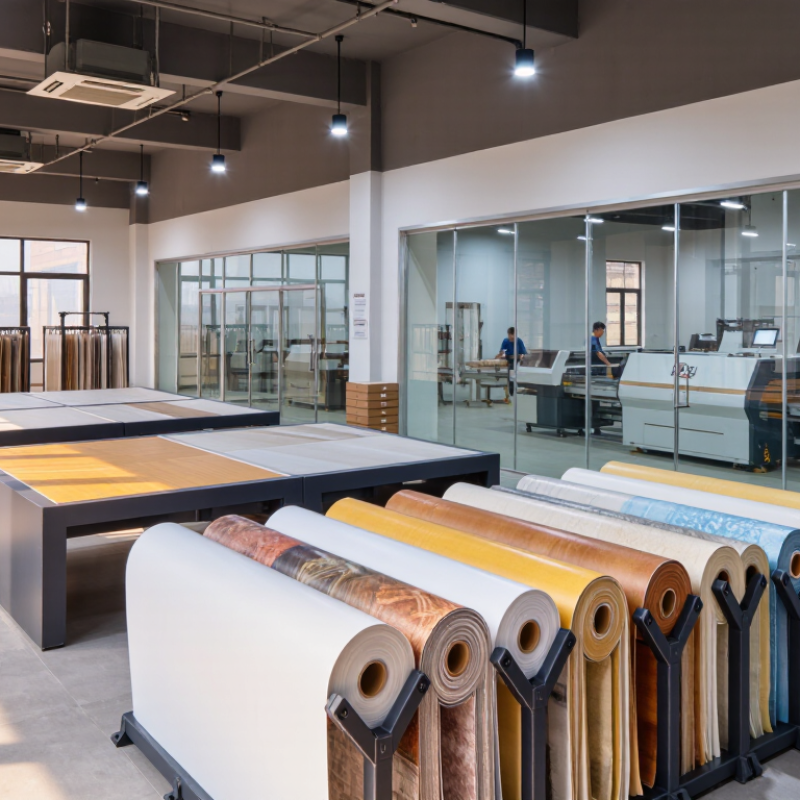
Define Your Custom Printed Flooring Requirements
How to Find China Top Custom Printed Floor Suppliers?
Define Your Custom Printed Flooring Requirements
A reliable supplier search starts with a precise flooring brief. Describe the project type, such as retail, hospitality, offices, or residential interiors. Record the room size, traffic level, substrate condition, and expected service period. Grand View Research valued the global flooring market at approximately USD 447 billion in 2023. This scale shows why specifications matter when comparing custom printed flooring suppliers.
State the flooring material, thickness, surface finish, and printing method you need. Include the exact panel or roll dimensions, repeat pattern, color references, and acceptable color variation. Request abrasion, slip-resistance, fire-performance, and volatile organic compound test documents. ASTM and EN standards can guide these requirements, but the correct standard depends on the destination market. Ask for a physical sample before approving mass production. Digital images can hide texture differences.
Do not overlook installation details. Confirm adhesive compatibility, joint treatment, protective coating, packaging, replacement quantities, and delivery schedule. A supplier should explain its quality-control checkpoints, not only show attractive project photos. The 2024 Resilient Flooring Market analysis by Fortune Business Insights identified commercial construction as a major demand area, where durability and maintenance strongly influence purchasing decisions. One practical mistake is specifying only the artwork. I have seen beautiful patterns fail because the substrate was uneven or the wear layer was too thin. Leave room for revision. Your first specification may be incomplete.
| Requirement Category | Key Specification | Recommended Requirement to Define | Why It Matters | Supplier Verification Point |
|---|---|---|---|---|
| Application | Installation environment | Specify whether the floor will be used indoors, outdoors, in retail areas, offices, exhibitions, hotels, gyms, or public facilities. | Different environments require different levels of abrasion resistance, moisture resistance, slip resistance, and dimensional stability. | Request installation references or test information for projects with similar environmental conditions. |
| Flooring Material | Base construction | Define the material type, such as PVC vinyl, rubber, carpet tile, polyester fabric, polypropylene, or another specified flooring substrate. | The base material affects flexibility, comfort, cleanability, print quality, service life, and total project cost. | Ask for a material specification sheet stating composition, thickness, weight, backing structure, and applicable standards. |
| Dimensions | Product size and format | Confirm roll width, roll length, tile size, plank size, or custom panel dimensions. Common commercial formats include rolls, tiles, and planks. | Correct dimensions reduce cutting waste and help ensure efficient transportation and installation. | Check production tolerances, usable width, edge accuracy, and whether custom dimensions are available. |
| Thickness | Total product thickness | State the required thickness in millimeters and include any backing or wear-layer thickness where applicable. | Thickness influences underfoot comfort, acoustic performance, indentation resistance, door clearance, and installation compatibility. | Request measured sample data and confirm the tolerance between the stated and actual thickness. |
| Printed Design | Artwork and visual effect | Provide vector artwork or high-resolution raster files, preferred colors, repeat dimensions, image orientation, and any logo-free decorative requirements. | Clear artwork specifications help prevent color mismatch, blurry details, incorrect repeats, and visible alignment errors. | Confirm accepted file formats, digital proof procedures, color approval steps, and repeat or pattern alignment capability. |
| Color Accuracy | Color control method | Define the required color reference system, acceptable color deviation, and whether a physical color sample must be approved before mass production. | Printed flooring may appear different under daylight, warm lighting, and cool lighting. Approval standards should be agreed in advance. | Request a production sample or strike-off and document the approved reference before placing the full order. |
| Surface Performance | Wear and abrasion resistance | Match the wear requirement to expected traffic levels: light residential, moderate commercial, or heavy commercial/public use. | High-traffic floors need a surface construction that can withstand repeated foot traffic and regular cleaning. | Ask for relevant abrasion, wear-layer, or traffic-classification test results when applicable to the material type. |
| Safety | Slip and fire performance | Specify the required slip-resistance and fire-performance classifications according to the destination market and building use. | Safety requirements can affect product approval, building compliance, insurance, and suitability for public or commercial spaces. | Request current laboratory reports and verify that the tested construction matches the final printed product. |
| Environmental Conditions | Moisture, UV, and temperature exposure | State whether the flooring will face humidity, water cleaning, direct sunlight, temperature changes, or outdoor exposure. | Moisture and ultraviolet exposure can influence dimensional stability, adhesion, fading, curling, and overall service life. | Confirm suitability limitations and request evidence for water resistance, dimensional stability, and color-fade performance where relevant. |
| Installation | Installation method and subfloor | Define loose lay, adhesive installation, click installation, modular placement, or another method. Describe the subfloor condition. | Installation compatibility affects preparation work, labor cost, replacement procedures, and final appearance. | Ask for installation instructions, recommended adhesive requirements, seam treatment guidance, and subfloor tolerances. |
| Order Volume | Quantity and minimum order quantity | Provide the estimated order quantity, number of designs, expected repeat orders, and required sample quantity. | Quantity and design count influence setup costs, production scheduling, material purchasing, and unit pricing. | Request a quotation that separates sampling, artwork preparation, tooling or setup, production, packaging, and delivery charges. |
| Sampling | Prototype and approval process | Require a physical sample showing the actual substrate, print quality, texture, thickness, backing, and finish. | A digital image cannot fully demonstrate texture, gloss, color under different lighting, or actual material performance. | Confirm sample lead time, sample charges, revision limits, and whether the approved sample becomes the production reference. |
| Quality Control | Inspection criteria | Define acceptable limits for color variation, pinholes, scratches, bubbles, printing streaks, edge damage, size deviation, and pattern misalignment. | Written inspection criteria create a consistent basis for pre-shipment checks and reduce disputes over cosmetic defects. | Ask whether the supplier supports in-process inspection, final inspection, batch records, and independent third-party inspection. |
| Packaging | Protection during transport | Specify roll or carton packaging, moisture protection, pallet requirements, product labels, quantity per package, and handling marks. | Appropriate packaging helps prevent crushing, contamination, moisture damage, and deformation during international transportation. | Review packaging photos or a packaging specification and confirm the shipping marks before dispatch. |
| Delivery | Production and shipping schedule | Set target dates for artwork approval, sample approval, production completion, inspection, and shipment. | Custom printed products normally require coordination between design confirmation, sampling, material preparation, printing, and finishing. | Request a written production schedule and clarify how delays, design changes, and partial shipments are handled. |
| Documentation | Technical and compliance documents | List the documents required for your market, such as technical data sheets, test reports, safety documents, packing lists, and certificates of origin. | Complete documentation supports customs clearance, internal approval, project handover, and regulatory review. | Check document validity, test sample identity, issue date, laboratory information, and consistency with the ordered specification. |
| Supplier Evaluation | Manufacturing capability | Evaluate printing equipment, material sourcing, finishing processes, quality-control procedures, production capacity, and export experience. | A supplier with suitable production capability is more likely to maintain consistent color, dimensions, quality, and delivery performance. | Compare technical responses, samples, inspection systems, communication quality, capacity statements, and total landed cost rather than price alone. |