 Catalog
 Replacement Cushions
 New Jersey Catalog
How to Source Home Outdoor Products Worldwide?
Sourcing Home Outdoor products worldwide requires more than comparing supplier prices. It demands practical judgment, reliable information, and careful communication across borders. A patio chair may look excellent online, yet feel unstable when assembled. A cushion may appear weatherproof, but fade after one season under strong sunlight. These details can change customer satisfaction, warranty costs, and long-term brand trust.
Experienced buyers usually begin with a clear product brief. It should define materials, dimensions, finishes, packaging, safety expectations, and target markets. Requests for samples are essential. Factory photographs help, but they do not replace an independent inspection. Buyers should confirm production capacity, quality procedures, export experience, and business credentials. They should also review testing documents for relevant materials and product categories. Requirements differ between countries, so professional customs and compliance advice remains valuable.
Small details matter.
A sourcing plan should also examine shipping routes, minimum order quantities, payment terms, lead times, and packaging strength. A crushed carton can turn a profitable order into a costly return. Sustainable materials deserve careful verification, not vague marketing claims. Supplier relationships improve when expectations are written clearly and checked regularly.
No global sourcing process is perfect. A trusted factory can still miss a color shade, and a successful sample can hide production inconsistency. That is why quality checkpoints, realistic schedules, and contingency suppliers are important. The strongest approach combines supplier research, physical testing, ethical purchasing, and honest risk assessment. It creates a more dependable path from international production to the customer’s garden, balcony, or outdoor living space.

Understanding the Global Home Outdoor Products Market
The global home outdoor products market is broader than patio furniture. It includes lighting, grills, storage, shade systems, and garden accessories. Grand View Research valued the global outdoor furniture market at approximately USD 20.7 billion in 2023. Its report forecasts a compound annual growth rate of about 5.6% from 2024 to 2030. These figures indicate steady demand, not effortless growth.
Regional habits shape sourcing decisions. Buyers in North America often prioritize larger seating, weather resistance, and fast delivery. European markets usually examine energy efficiency, material traceability, and compact design. Asia-Pacific suppliers offer broad production capacity, but quality can vary between factories. I would compare outdoor fabric test results, aluminum thickness, coating performance, and packaging strength before discussing price. Small details matter.
The International Trade Centre recommends using detailed customs data when evaluating product flows and supplier countries. UN Comtrade data can also reveal seasonal import patterns and tariff classifications. Product safety remains essential. Check chemical restrictions, labeling rules, electrical requirements, and applicable packaging standards in the destination market. Do not rely only on supplier declarations. Request recent laboratory reports and verify the testing scope.
The numbers can mislead.
Market reports often define “outdoor furniture” differently. Some include commercial projects, while others focus on household purchases. That weakness deserves attention. A sourcing plan should combine report data with retailer interviews, sample inspections, and landed-cost calculations. A product that looks profitable on paper may fail after freight damage, returns, or unexpected seasonal demand.
How to Source Home Outdoor Products Worldwide? - Understanding the Global Home Outdoor Products Market
Global sourcing reference by product category, trade classification, production region, compliance requirements and purchasing considerations
| Product Category | Typical HS Code | Common Sourcing Regions | Key Materials | Relevant Standards and Regulations | Main Cost Drivers | Sourcing Checkpoints |
|---|---|---|---|---|---|---|
| Outdoor Furniture | 9403; 9401 for seats | East and Southeast Asia; South Asia; Eastern Europe; Türkiye; Mexico | Aluminium, steel, hardwood, engineered wood, synthetic rattan, polypropylene | EN 581 for outdoor seating and tables; ASTM furniture requirements; chemical restrictions such as REACH where applicable | Metal and resin prices, labor, weather-resistant coatings, packaging volume and freight cube | Salt-spray testing, UV resistance, load testing, weld quality, moisture protection and carton drop testing |
| Outdoor Cushions and Covers | 9404; 6307 for certain made-up textile articles | South Asia; Southeast Asia; East Asia; North Africa; Eastern Europe | Solution-dyed polyester, acrylic fabric, cotton blends, polyurethane foam, polyester fiberfill | Textile fiber labeling rules; REACH or equivalent chemical requirements; flammability rules depending on destination | Fabric construction, filling density, water-repellent treatment, sewing labor and seasonal capacity | Colorfastness, hydrostatic resistance, seam strength, shrinkage, mildew resistance and dimensional tolerance |
| Gazebos, Canopies and Tents | 6306 | East Asia; Southeast Asia; South Asia; Eastern Europe | Polyester or polyethylene fabric, steel, aluminium, fiberglass and plastic fittings | EN 15619 for temporary structures where applicable; flame-retardancy and structural safety rules vary by market | Frame gauge, fabric weight, waterproof coating, engineering requirements, accessories and packed volume | Wind-load performance, water penetration, corrosion resistance, stitching, spare parts and installation instructions |
| Outdoor Lighting | 9405 | East Asia; Southeast Asia; Central and Eastern Europe; Mexico | Aluminium, steel, glass, polycarbonate, LEDs, electronic drivers | IEC 60598; applicable electrical safety, EMC, energy-labeling and restricted-substance requirements | LED components, driver quality, ingress protection, housing material, testing and certification | IP rating verification, electrical safety tests, lumen maintenance, thermal management, cable quality and warranty terms |
| Umbrellas and Outdoor Shade Products | 6601 | East Asia; Southeast Asia; South Asia | Polyester, acrylic, aluminium, steel, fiberglass and concrete or metal bases | UV-protection claims must be substantiated; textile labeling and general product-safety rules apply | Fabric density, pole diameter, base weight, mechanism, wind performance and oversized freight charges | Opening cycles, tilt mechanism, fabric colorfastness, base stability, corrosion testing and replacement-part availability |
| Outdoor Cooking Equipment | 7321; 8419 or 8516 for certain electric appliances | East Asia; South Asia; Türkiye; Central and Eastern Europe; Mexico | Stainless steel, coated steel, cast iron, aluminium and heat-resistant glass | Gas-appliance, electrical-safety and food-contact rules depend on fuel type and destination market | Stainless-steel grade, burners or heating elements, safety valves, testing, packaging and after-sales parts | Heat distribution, leakage checks, ignition reliability, corrosion resistance, user instructions and spare components |
| Planters and Garden Containers | 3924; 6810; 6913; 9403 for some furniture-type articles | East Asia; Southeast Asia; South Asia; Southern Europe; North Africa | Polypropylene, polyethylene, ceramic, cement, fiberglass and metal | Chemical restrictions, packaging rules and heavy-product safety requirements; food-contact rules generally do not apply | Material thickness, mold complexity, weight, finish, breakage risk and freight utilization | Drainage design, UV stability, freeze-thaw resistance, dimensional consistency, stacking and packaging performance |
| Garden Hand Tools | 8201 | East Asia; South Asia; Eastern Europe; Latin America | Carbon steel, stainless steel, aluminium, fiberglass and hardwood | General product-safety rules; timber legality and treatment requirements may apply to wooden handles | Steel grade, forging or stamping method, handle material, finishing, labor and packaging | Hardness, edge retention, handle attachment, corrosion resistance, tensile strength and carton labeling |
| Outdoor Storage and Utility Products | 3924; 9403; 7309 for certain metal storage units | East Asia; Southeast Asia; South Asia; Eastern Europe; Mexico | Polypropylene, polyethylene, galvanized steel, aluminium and composite panels | Chemical restrictions, structural-safety requirements and packaging-waste rules vary by destination | Material thickness, weather sealing, hardware, flat-pack efficiency, tooling and container utilization | Water ingress, UV aging, load capacity, lock performance, assembly time and replacement hardware |
Global Sourcing and Import Planning Benchmarks
| Planning Dimension | Practical Benchmark | Why It Matters |
|---|---|---|
| Supplier Qualification | Verify legal registration, manufacturing capability, export history, quality system and social-compliance documentation before sampling. | Trading intermediaries and factories can have different lead times, pricing structures and quality-control responsibilities. |
| Sampling Sequence | Use a functional prototype, a pre-production sample and a sealed golden sample before mass production. | Outdoor products are exposed to sunlight, rain, wind, temperature changes and repeated assembly. |
| Inspection Timing | Perform pre-production, during-production and pre-shipment inspections according to product risk. | Early inspection reduces the cost of correcting material, color, dimensional and packaging defects. |
| Incoterms and Landed Cost | Compare EXW, FOB, FCA, CIF and DDP only after calculating freight, insurance, duties, taxes, customs clearance and inland delivery. | The lowest factory quotation is not necessarily the lowest total delivered cost. |
| Shipping Mode | Use ocean freight for regular bulk orders, rail or multimodal options for selected corridors, and air freight mainly for samples or urgent replenishment. | Furniture, shade products and planters are often limited by cubic volume rather than product weight. |
| Seasonality | Place production orders several months before the destination market’s spring and summer selling season. | Demand peaks, factory holidays, port congestion and promotional calendars can extend replenishment lead times. |
Reference framework: Harmonized System product classifications, International Trade Centre trade terminology, International Electrotechnical Commission standards, European Committee for Standardization requirements, ASTM standards and destination-market customs and product-safety rules. HS classification and compliance obligations should be confirmed with the importing country’s customs authority before purchase.
Related Posts
-
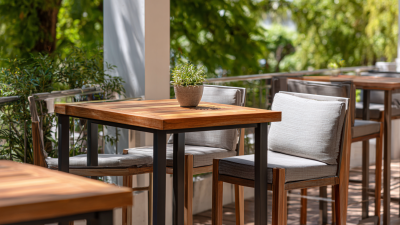
How to Select a Premium Manufacturer for the Best Outdoor Tables: Key Insights and Data-Driven Tips
-
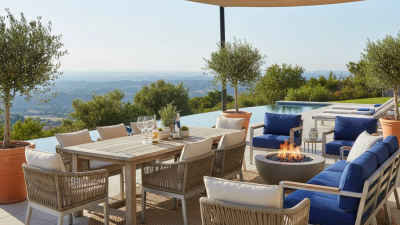
2026 How to Choose Outdoor Furnishings That Last and Impress?
-

Finding Quality Suppliers for Best Outdoor Tables with Essential Checklist Tips
-
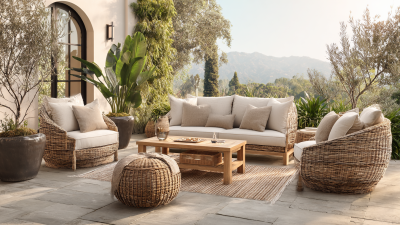
How to Choose the Perfect Outdoor Furnishings for Your Unique Space
-
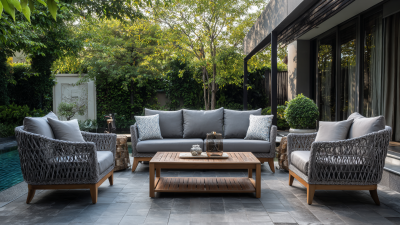
Transform Your Backyard with Stylish Yet Durable Outdoor Furnitures for Every Season
-

10 Essential Tips for Choosing Outdoor Furnishings for Your Space